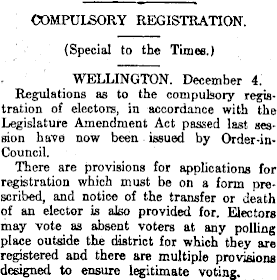
Image: Papers Plus New Zealand, Southland Times, Issue 19418, 5 Dec 1924, p5.
One of the most frequent hurdles for those researching New Zealand ancestry is the discovery that most historical census records were destroyed, with a few exceptions, after the statistical data was gathered. Unlike the UK or the US, where census returns provide a clear “snapshot” of a family, New Zealand researchers must rely on a mosaic of other sources to reconstruct their ancestors’ lives.
If you’ve hit a brick wall, here are three essential strategies recommended by professional record agents to help you bridge the gap.
- Leverage the World’s First Universal Suffrage
New Zealand made history in 1893 as the first self-governing country in the world to grant women the right to vote in parliamentary elections via the Electoral Act signed on the 19 September 1893. For genealogists, this means that New Zealand Electoral Rolls from the late 19th century onwards are exceptionally comprehensive.
- Pro tip: Because enrollment on the Electoral Rolls eventually became compulsory for all eligible voters (even though casting a vote remained voluntary), they serve as a remarkably reliable “census substitute” for identifying an ancestor’s location and occupation between official records.
- Dive Deep into “Papers Past”
The National Library of New Zealand’s Papers Past is one of the most powerful free digital archives available. In a smaller population, local newspapers often recorded details that wouldn’t make the cut today.
- What to look for: Don’t just search for “Births, Deaths, and Marriages.” Look for probate notices, land transfer lists, and even social columns which might mention an ancestor visiting a relative in another town—providing the “missing link” for a migration you couldn’t otherwise prove.
- The Power of Intentions to Marry
While birth and death certificates are vital, Notices of Intentions to Marry (held by Archives New Zealand from 1856 to 1956, in their Wellington archive) often contain more information than marriage certificates eg. often contain length of residence, amount of time resided in the district etc. This can be the “smoking gun” needed to calculate exactly when an immigrant ancestor arrived in the country, helping you narrow down your search for passenger lists and shipping records.
Why Hire a Professional?
While many of these records are accessible online, interpreting the nuances of local geography and archaic record-keeping requires experience. An AAGRA-accredited researcher specializes in these “lateral” sources, helping you break through brick walls when the standard records run dry.