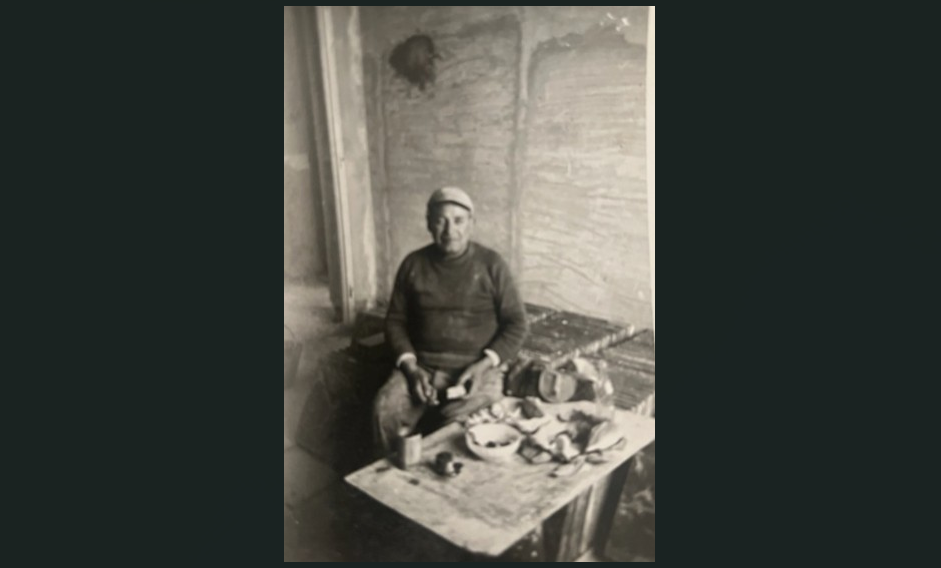
Image 1: Grench Natalino (Courtesy of Ann’s client Paul)
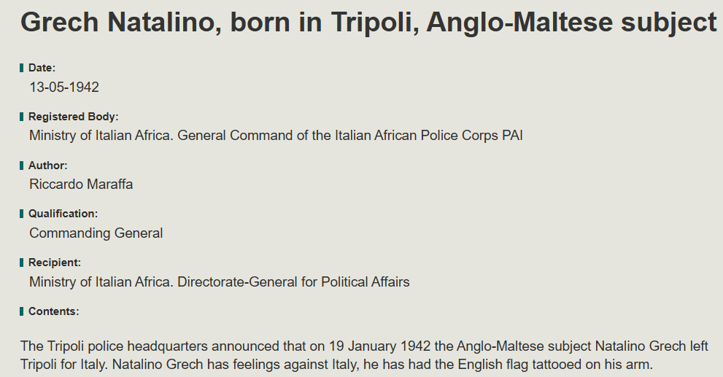
Image 2: Record from I campi fascisti
By Ann Mushet
Family history research often leads me into unexpected and fascinating areas of history. I have recently completed a research project for Paul, who was born in Melbourne to parents of Maltese descent, and the investigation uncovered a remarkable story spanning Malta, Libya and Australia.
Paul’s father, two uncles and paternal grandparents were all born in Tripoli, Libya, where a significant Maltese community had settled. During the Second World War, these families became known as the Tripolini Maltese. As British subjects living in Italian-controlled Libya, many were regarded as enemy nationals and were interned in Italian concentration camps. Paul’s mother was born in Malta.
Paul’s father was only six years old when the family was sent to Italy. After the war they returned to Libya before eventually migrating to Melbourne in 1957. Like many people who experienced wartime hardship, his father rarely spoke about those events, so much of this history had remained unknown within the family.
Through documentary research I was able to locate records relating to several family members during the wartime period, helping to piece together a clearer picture of what they experienced.
An especially interesting discovery came through DNA analysis. Paul’s DNA results showed that his parents were related as third cousins once removed, a finding that helped explain a number of DNA matches and added another dimension to the family’s history.
To build a comprehensive account, I used a wide range of resources, including historical records, specialist websites and educational presentations. I also joined a webinar presented by the Melbourne Maltese Historical Society on the history of the Tripolini Maltese community, which provided valuable historical context for the research.
The completed project has been compiled into a 72-page family history document so that the family can preserve and potentially publish the story for future generations. For me, this project was a wonderful example of how genealogical research can do far more than identify names and dates. By combining documentary evidence, DNA analysis and historical context, it is possible to recover family stories that might otherwise have been lost and to place individual lives within the broader events of history.