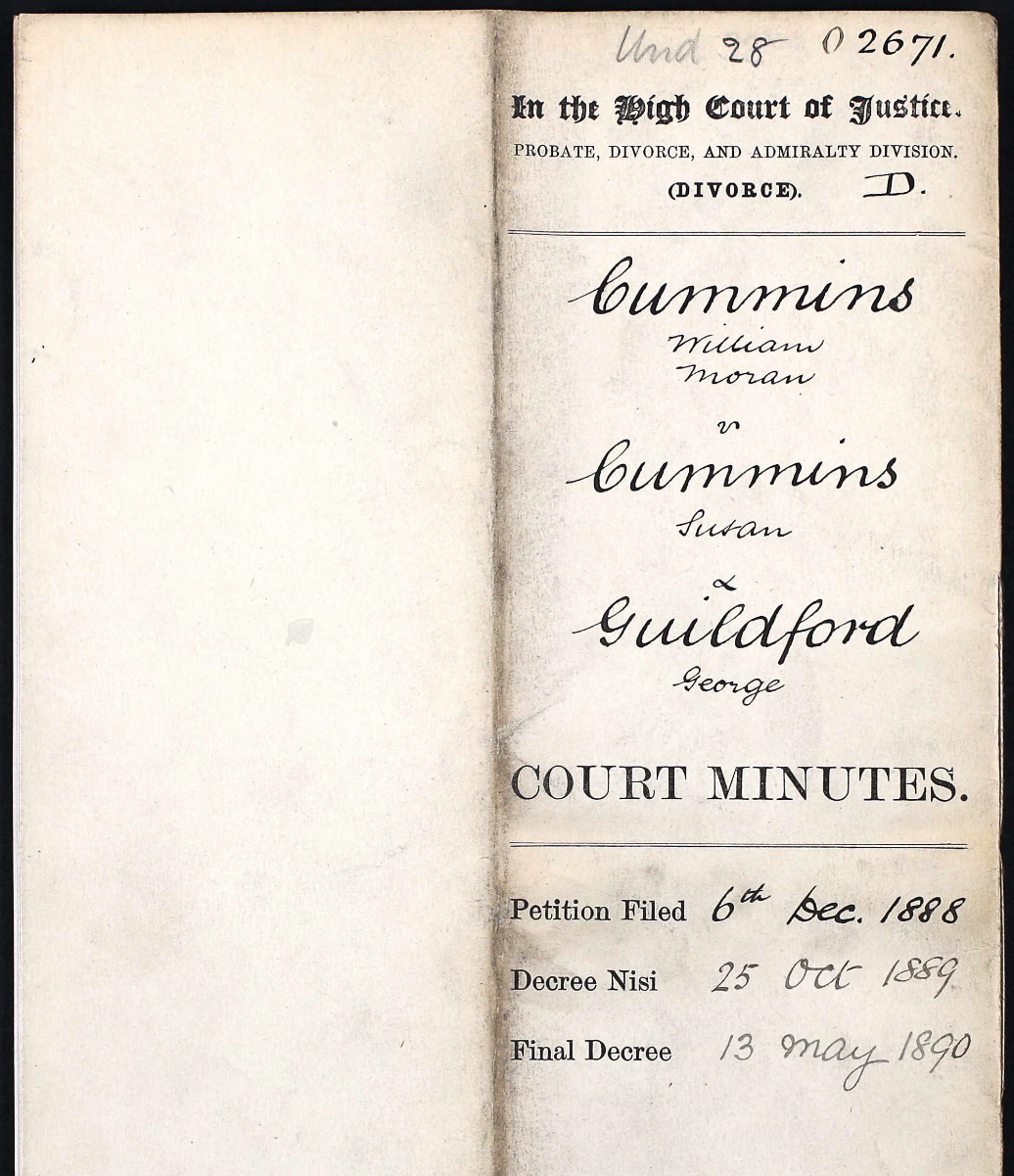
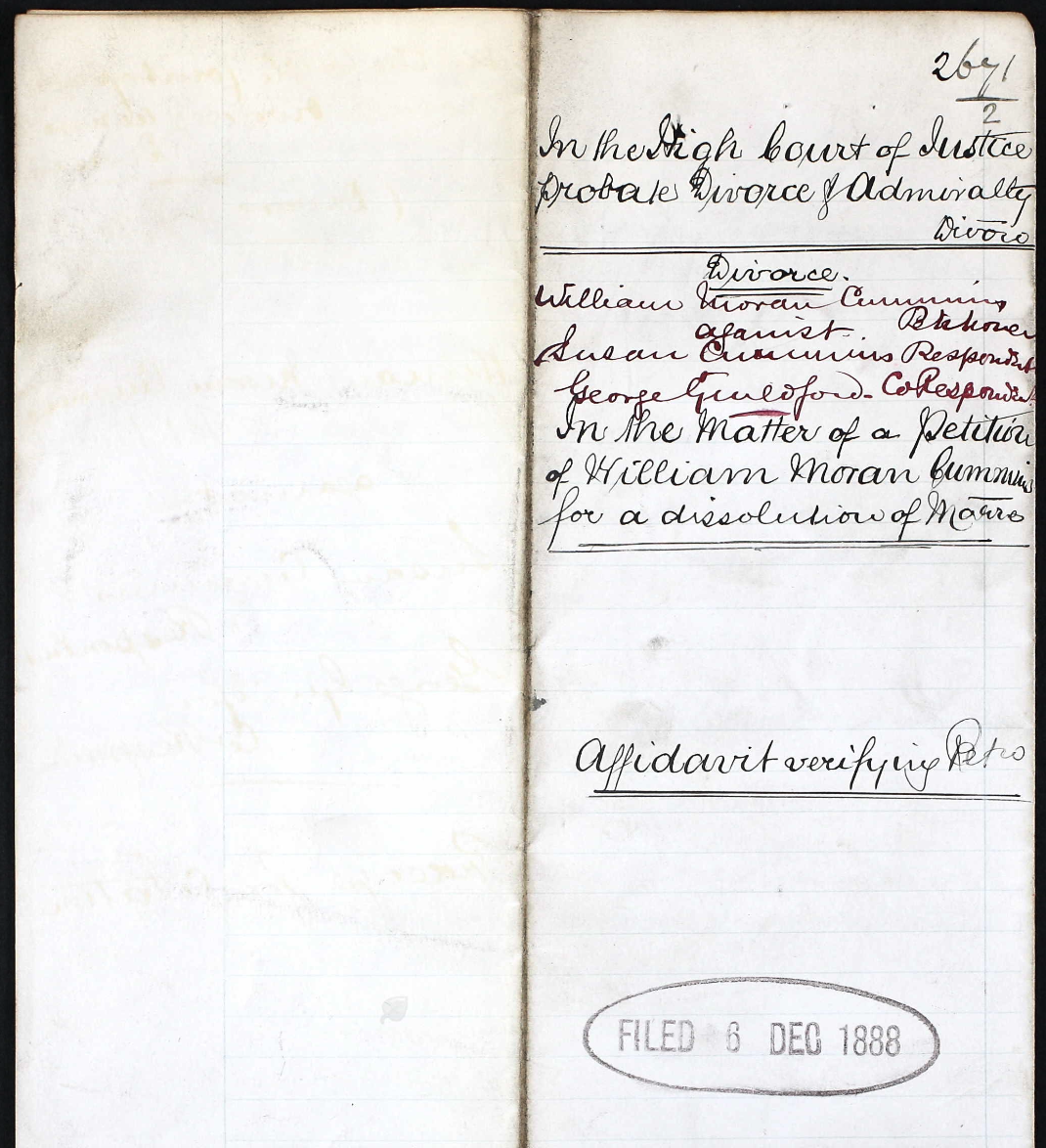
Image from Ancestry.com, courtesy of National Archives (UK) – (see endnotes).
Desperately Seeking Susan
and finding her in unexpected places
Like so many research questions, this one seemed pretty simple on the surface – locate the birth record of Susan Baker. Family stories were unambiguous, if a little short on detail:
Born in England, married George Gilford (probably in Adelaide around 1885), had seven children, and died in Adelaide in 1857 aged 95.
Before rushing into searching for a Susan Baker born somewhere in England about 1862, validating as much information about Susan as possible from Australian records in the usual way was a logical first step. But this was not going to be as straightforward as I had assumed.
What we thought we knew
Death certificate first. No new information, but it did record that she had been born in England, and that she had been 17 years old when she married, which, if correct, would suggest she was married about 1879. The usual death certificate caveat applied, of course – the information was second-hand.
Next up, the marriage certificate. This had the potential to be a gold mine of first-hand information – age, place of birth, parents’ names – all data points that could help narrow the search for her birth in England. But it was not to be. I could find no record of a marriage between George Gilford and Susan Baker anywhere in Australia between 1875 and 1895.
There are many reasons why a marriage may not have been registered, so I set this disappointment aside for the moment and began searching for the birth records of her children, in the hope that I would learn something that could give me a clue.
Again, my hopes were dashed. Susan’s seven children were born between 1887 and 1903 in Adelaide; however, only one of these births was registered, and that birth certificate threw a proverbial spanner in the works. The birth certificate of Susan’s daughter in 1889 recorded her maiden name as Cummins.
Was this why I couldn’t find a marriage for George and Susan? Was her maiden name really Cummins and not Baker? But if so, why was the family so certain it was Baker?
I began to look for other records related to Susan’s children that might have recorded their mother’s maiden name: marriage certificates, death certificates, and military records. And with one exception, where Susan’s maiden name was recorded, it was Baker. The exception – a note in the military record of one of her sons. And this recorded her maiden name as Cummins.
So, was I looking for Susan Baker or Susan Cummins?
Baker, or Cummins, or Both?
I retraced my steps and searched for a marriage between George Gilford and Susan Cummins, but found no record. I widened the search to include spelling variations and a broader time range—still nothing. I concluded that there was no marriage record to find, either because the marriage was not registered or because it did not occur at all.
The weight of evidence suggested Susan’s maiden name was Baker; family knowledge, the majority of documents, and even a large number of family trees on Ancestry identified Susan as a Baker. But I was uneasy. All this evidence was second-hand. The two instances in which her maiden name was recorded as Cummins were first-hand accounts from Susan herself. I needed something more to satisfy myself that Susan was a Baker.
And then a thought. What if both names were right? Could it be that Susan was married before she met George Gilford? Either Susan Cummins married someone named Baker, or Susan Baker married someone named Cummins, and her husband died, leaving her free to marry again.
What followed was several hours of searching both Australian and UK records for marriages, deaths, and immigration. In the end, it was none of these that revealed the truth about Susan’s maiden name. It was a divorce record.
Divorce in the nineteenth century
I had found twentieth-century divorce records quite useful in my research in the past, but this was the first time I had encountered records from this much earlier period. I knew very little about the legal framework or the social context, other than that divorce was uncommon, and so I set out to learn more.
In the late nineteenth century, divorce was still relatively rare, and for most people, difficult to obtain. In England, civil divorce had only been available since the Matrimonial Causes Act of 1857, which removed divorce from the church’s jurisdiction. Even then, the process remained expensive, public, and procedurally complex, placing it beyond the reach of many. By the 1880s, only a few hundred divorces were granted each year across England and Wales. The law was also unequal: a husband could obtain a divorce on the grounds of his wife’s adultery alone, while a wife was required to prove adultery alongside an additional offence such as cruelty or desertion.
In Australia, divorce law broadly followed the English model, with proceedings heard in the Supreme Courts of the individual colonies. Access remained limited, and cases were often reported in newspapers because of their public nature. For researchers today, this visibility can be helpful.
Divorce files for England are held at The National Archives in London, many of which are indexed online on websites such as Ancestry.com, while Australian records are held at the relevant state archives. Some records can be accessed digitally, while others require in-person research or the assistance of a local researcher.
The record that changed everything
On 6 December 1888, William Moran Cummins filed a petition for the Dissolution of Marriage in the High Court of Justice in London. Th affidavit that accompanied the petition revealed an unexpected story.
In 1878, Susan Baker married William Cummins in London. In 1886, they travelled to Australia, where they met a man named George Gilford. By 1888, William had returned to England and filed for divorce, citing Susan’s adultery with George Gilford. The divorce was granted on 13 May 1890.
For a husband to return to England and successfully petition for divorce on the grounds of adultery committed overseas was unusual, but entirely consistent with the legal framework of the time, provided he remained domiciled in England. While such cases were not common, they were by no means unheard of, particularly in an era when movement between Britain and Australia was well established.
Suddenly, the pieces began to fall into place.
Susan was Susan Baker, and she was also Susan Cummins when she registered her daughter’s birth in 1889. Both names were correct—they simply belonged to different points in her life.
The absence of a marriage record between Susan and George now had a clear explanation. Susan was still legally married to William Cummins, which may also explain why most of her children’s births were not registered.
What we learned – about Susan, and looking beyond what we think we know
The records pointed strongly in one direction. The weight of evidence suggested that Susan’s maiden name was Baker, and it would have been easy to accept that conclusion and look no further. But that small inconsistency remained: the few mentions of the name Cummins, as provided by Susan herself. Something just didn’t feel right, and it was enough for me to pause, to question, and to look again.
Only then did I widen the search. The answer did not lie in the expected records of birth, marriage, or death, but in a divorce file – an uncommon and easily overlooked source for this period. It was by stepping outside the usual search patterns that the truth of Susan’s origins emerged.
Family history does not always reveal itself through the most obvious paths. What we think we know is sometimes wrong, and sometimes it is right. Sometimes it is useful to sit with uncertainty a little longer, to trust our judgement when something feels unresolved, and to follow the question wherever it leads.
In this case, doing so revealed not only Susan’s name but the life that lay behind it. There is more to be discovered, but we now know Susan’s birth date and place, and the scene is set to trace her ancestry.
Bibliography:
Ancestry.com. England & Wales, Civil Divorce Records, 1858-1918 [database on-line]. Provo, UT, USA: Ancestry.com Operations, Inc., 2012. https://www.ancestry.com.au/search/collections/2465/ accessed 29 April 2026.
Probert, Rebecca. Marriage Law for Genealogists. Takeaway, 2016
The National Archives (UK), Research Guide: Divorce records. https://www.nationalarchives.gov.uk/help-with-your-research/research-guides/divorce/ accessed 29 April 2026.