“A to Z Genealogy Tips – Fortnightly Series”
Not all records are equal—understanding types ensures accuracy.
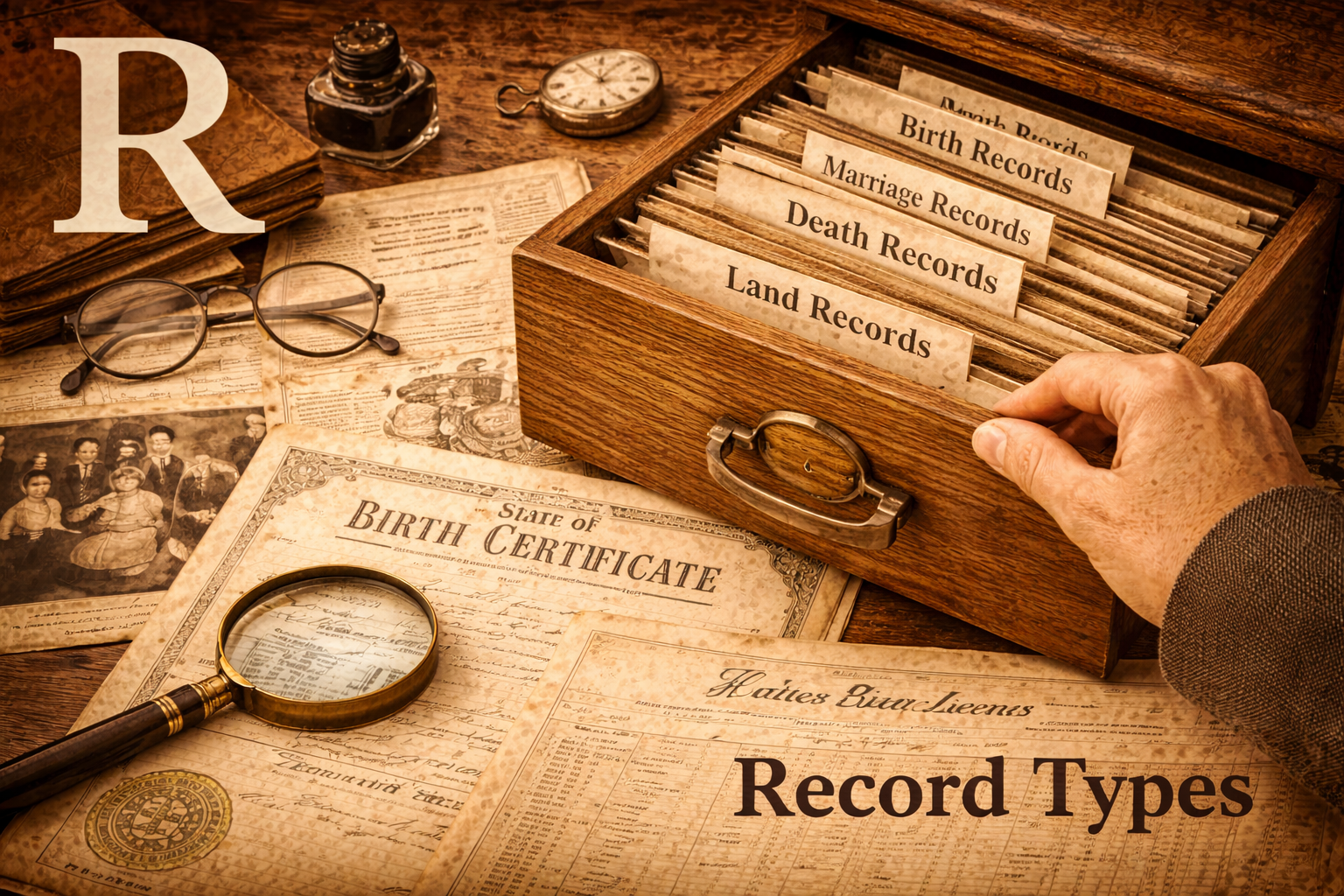
Know the difference between primary, secondary, indexes, transcripts, and original records. Primary sources are created at the time of an event, while secondary sources interpret them.
Examples of primary sources are birth, marriage and death registrations, census’ documents etc. Informants of these documents often participated in the event. Secondary records are created later and information may be drawn from primary and other sources, these may include transcribed records, biographical directories, family histories, indexes etc. Primary sources are generally considered more accurate as the people involved are reporting the event and there is less copying. Secondary sources can provide wonderful clues as some interpretation may be included. It’s important to independently verify the information is correct.
Using reliable and multiple sources is essential for accurate genealogy.
Review your sources and ensure you know which are primary, secondary, or derivative.