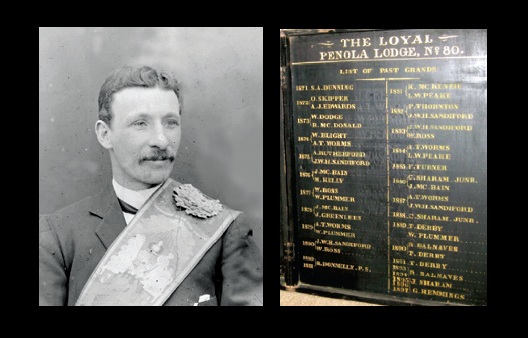
Image 2: Past Grands of the Loyal Penola Lodgee No. 70, 1871-1897.
Images courtesy of Andrew Peake.
We’re pleased to share the full article by AAGRA member Andrew Peake OAM, originally published in The South Australian Genealogist, Vol 53 No 3, August 2026.
A century [now nearly a century and a half] ago every Australian town and village had its lodge. While the phrase ‘lodge night’ meant a different night to each lodge, the phrase was one of the most common in the land. For decades the lodges were far more important than the trade unions but unlike the unions they rarely are mentioned in the single volume histories of Australia. This is partly because the lodges cloaked themselves in mystery. Their oaths and rituals and dress belong to a forgotten era. Today, historians seem to have little knowledge of what the lodges believed in and role they played in town and suburban life. Their role was vital. They were a major private precursor of today’s welfare state, and many of their welfare tasks they carried out with impressive skill and the help of a tiny bureaucracy. In all, they form a heroic chapter in Australia’s history.[1]
The Hamilton Spectator reported on the 26 June 1871, that Penola already had a Foresters’ Court and a Rechabite Tent, and the Odd Fellows intended to start a Lodge at the Prince of Wales Hotel.[2] The Loyal Penola Lodge No. 80 was a result of this meeting.
Lodges of the Odd Fellows had a long history.
Today they are known as The Independent Order of Odd Fellows (IOOF). The earliest known Lodge, of which records have been kept, is the Loyal Aristarcus Lodge No. 9 in London. Documentation exists of this Lodge, from 1745. Odd Fellows Lodges are spread throughout England and Wales, and are believed to have been around since the Middle Ages, when increased trade led to the formation of trade guilds. The guilds were set up by the various trades, exclusively for members of those trades. They performed such a good service for their members, many people from lesser-known trades, also wanted to have the same benefits. This, some believe, to have been the origin of the name “odd fellows.” They were an assortment of lesser and poorer trades. They were the “odd fellows.”
Around about 1810 the Manchester based Odd Fellows were not happy with the way the Grand Order was being run, so they formed the Independent Order of Odd Fellows, Manchester Unity. It is this Order that became established in South Australia. Some of the early pioneers had been members in England, and were eager to start a Lodge in Adelaide. On the 2nd of November 1840, four persons met at the Rose Inn, Sturt Street, Adelaide, with the idea of forming the IOOF in South Australia.[3] Three of the four, were members in England. It was agreed they would start an Adelaide Chapter.[4][5] The first Lodge in South Australia was called Adelaide Lodge.
The IOOF Manchester Unity, was always known as a secret society. This caused some concern for non-members. Some of the members themselves were concerned, because most meetings of the Order were held in licensed premises. They felt this did not give a favourable impression. The printed media of the day often reported individual Lodge meetings, and certainly Regional, and Grand Lodge meetings were covered by them in detail. Members of the order who spoke, or proposed toasts, or responded to toasts were all named in those reports. So, it was not the membership, but the procedures that were kept secret from non-members. We know from those press reports the names of some of the Lodge
members. Some anonymity was gained, as the initials used in the report, were their rank in the order, and not their Christian names. (i.e. N.G. Smith. (Noble Grand). D.G.M. Smith (Deputy Grand Master).
The Universal Vision of the IOOF is, “To elevate the character of man under the Fatherhood of God and within the brotherhood of man” The Founding Obligation for Members duties are:
To visit the sick
Relieve the distressed
Bury the dead.
Educate the orphan.
It is considered that these obligations apply as much in the twenty-first century as they did at the foundation of the Order, but some are now delivered in a manner more appropriate for the times through personal financial security for funerals, and educational opportunities for members’ children.[6]
However, in the early twentieth century the primary role of local lodges was to provide sick pay, unemployment relief, medical benefits in paying medical fees, and funeral benefits. There was less focus, or need, on educating orphans and visiting the sick.
Very few records of the activities of Odd Fellow Lodges have survived. The State Library of South Australia is the formal repository of the IOOF, however, the three hundred plus items are poorly itemised to find anything useful for a particular Lodge. Even if found, there are restrictions on access and use of information found.[7]
However, a small window of the activities of the Loyal Penola Lodge No. 80, between 1911 and 1913 has survived, which gives some insight into the day-to-day operation of a Lodge. In 1911, Archibald Thomas Lyle Peake, was elected Secretary of the Loyal Penola Lodge, taking over from Herbert James Darwent, who had moved initially to Kingston SE and later Payneham, in 1910.[8]
To place the Loyal Penola Lodge into context, in South Australia in 1913, friendly societies catered for 70% of the state population.[9]
At the time, the Odd Fellows was not the only friendly society offering a similar service in Penola. The other societies were:
Freemasons – met Tuesday before full moon
Odd Fellows – met alternative Tuesday evenings
Foresters – met alternate Tuesday evenings; junior and female courts alternate Mondays
Independent Order of Rechabites – met alternate Thursdays; female tents alternate Thursdays and juniors every 4th Monday
Sons of Temperance – met alternate Thursdays, cadets of temperance alternate Thursdays
HACB Society (Hibernian Australasian Catholic Benefit Society)– met alternate Tuesdays
Australian Natives Association – met alternate Thursdays
Orange Lodge – met Friday before full moon
Ancient Order of Druids – met alternate Tuesdays.[10]
Each of these friendly societies had differences. The Freemasons tendered to cater for the aspiring middle-class, Rechabites and Sons of Temperance for those who were teetotal, Hibernians for those who were Catholic, the Orange Lodge for those who were protestant from the northern counties of Ireland. They all met at least once per month to receive contributions and socialise. Many organised annual dinners, Christmas parties, and gatherings such as picnics.
The different societies had their own ritual, ceremonies and unusual names for office bearers. Many wore aprons, waistcoats, cuffs and sashes to denote membership. Odd Fellows wore a sash or waistcoat. The elected structure of a local IOOF Lodge was Noble Grand, Vice Grand, Secretary and Warden.
Friendly societies became recognised as part of the fabric of society, with the need to regulate their operations. The South Australian legislature first passed an Act to Regulate Friendly Societies,[11] in December, 1852. The IOOF Manchester Union sought a Private Bill of Parliament in 1867, with the passage of the Manchester Union, Independent Order of Oddfellows Act in 1867. A new Act was passed by Parliament in 1874, with the passage of the Manchester Union, Independent Order of Oddfellows Act, 1874. All the friendly societies legislation was consolidated into the one piece of legislation, with the passage of the Friendly Societies (Consolidation) Act No. 1382 of 1919. The Public Actuary, a public office, became responsible for the financial operations of the friendly societies, and he produced five-yearly reports to Parliament on the individual operations of each of the friendly societies from the late nineteenth century.
In 1917 the Public Actuary reported that in 1914 the IOOF MU was the largest friendly society in South Australia with 12,809 members (the next highest was the Druids with 12,303, and the Foresters with 8,889). In the SE District of the IOOF MU, the average age of contributors in 1914 was 41½ years, and sickness benefits was paid out at 2/6 per week, with a flat rate for funeral benefits of £40.[12]
Peake presented a list of financial members for the quarter ending 31 August, 1911, which he supplied to the local medical practitioner, Dr Albert Curtis, who was supplied with a further list each quarter of paid-up members, who would receive either free or subsidised medical treatment.
Single Members
John William Hilton Sandiford
J Kearney
William Edward Plummer
William Ross
Leonard William Peake
F Turner
William Gammon
J Skinner
Robert Balnaves
F Flint
George Hemmings
Anton Theodore Worms
Herbert James Darwent
William Edward Plummer jr
Edward Thomas Plummer[13]
A J Hemmings
Archibald Edward Henry Peake
W T Gleeson
D Laing
R R Rodgers
P J O’Connor
William Redman
G G Bailey
Theodore Thomas Hemmings
Archibald Thomas Lyle Peake
Lyle Robert Peake
Walter William Pinches
Arthur H Strong
J BaileySilas Lorenzo Norman
31 members in all and Dr Curtis was paid 3 shillings and 9 pence per single member for the quarter, i.e. £5.16.3.
Family Members
Silas Lorenzo Norman 10/-
Herbert James Darwent 10/-
James Skinner 10/-
Robert Balnaves £1.0.0
William Blight 15/-
Mrs James (Kate) Sharam 15/-
Archibald Edward Henry Peake 10/-
Lyle Robert Peake 10/-
John Bailey 10/-
Percy Henry Kilsby 10/-
Edward Thomas Plummer 10/-
G G Bailey 10/-
Total of £6.10.0 for family members, plus £5.16.3 for single members, payable to Dr Curtis.
During the next eighteen months T D Bilston and H Callender were added as a member, and one member (un-named) dropped off. Each member made fortnightly contribution of 2 shillings and 4 pence.
On the 11 May 1911, J Kearney at Casterton reported that he had been sick for 5 weeks and 1 day, and received a cheque for sick pay of £4.13.0. On 4 July 1911 he received a further payment of £2.11.0 sick pay for 2 weeks and 5 days. On 14 June 1912, Hugh James Wilson at Kooringa, reported that he had been sick for 1 week and 2 days and received sick pay of £2.4.0 at 18 shillings per week. On 28 June 1912, F Turner at Garfield, Victoria, reported sick for 3 weeks and 1 day, and received sick pay of £2.17.0 at 18 shillings per week. These were the only payment during the 1911 to 1913 period, and reflected the needs of the time when there was no such thing as employee sick pay, or sickness benefits from the state or federal governments.
Friendly Societies faded away after the Second World War, with the growth of government welfare services and the widening role of employers in providing sick leave, long-service leave, and superannuation. In the 1950s many could afford to take out life insurance policies, and in doing so, felt less inclined to take out the humbler, old-fashioned policies from the friendly societies. Funeral benefits, for a long time a mainstay of lodges, were no longer as relevant with increased life-span, a Commonwealth funeral benefit, and the growth of funeral director’s funeral funds.
The Loyal Penola Lodge was one of the many lodges to disappear, although the actual date is unknown.
In June 2002 the IOOF ‘demutualised’ and each of the remaining members were given a parcel of shares and IOOF Holdings Ltd. was floated on the Australian Stock Exchange in the following year. IOOF Holdings Ltd. changed its name to Insignia Financial Ltd. at the 25 November 2021 AGM. To recognise the long history of providing support to the community as a friendly society, throughout the process of IOOF’s Demutualisation in 2002, the company formed the IOOF Foundation. The Foundation provides grants that aid Australian not-for-profit organisations primarily working with disadvantaged families, youth, and aged care.[14]
___________________________________________________________________________________________
[2] Hamilton Spectator, 1 July 1871, p.3.
[3] The Rose Inn does not appear in JL (Bob) Hoad’s book, 1836-1984, Adelaide, 1986. otelsd and Publicans South Australia, Adelaide, 19856
[4] Examiner, 6 Jan 1842, p.3.
[5] It has not been possible to positively identify these four early members, but they possibly could be a Mr Jones, Ephraim Randall, publican of the Rose Inn; and William Davis, tinman of Rundle street.
[6] https://www.ioofsa.org.au/
[7] State Library of South Australia, Ref. SRG765.
[8] The information hereafter comes from a letter book in the possession of the author of outward correspondence for the period 1911 to 1913.
[9] Geoffrey Blainey, op cit., p.130.
[10] Details extracted from South-East newspapers, via TROVE.
[11] Friendly Societies Act No. 22 of 1852.
[12] South Australian Parliamentary Paper 20/1917.
[13] Forenames have been added where known.
[14] Wikipedia ‘Insignia Financial’, 5 Feb 2026.