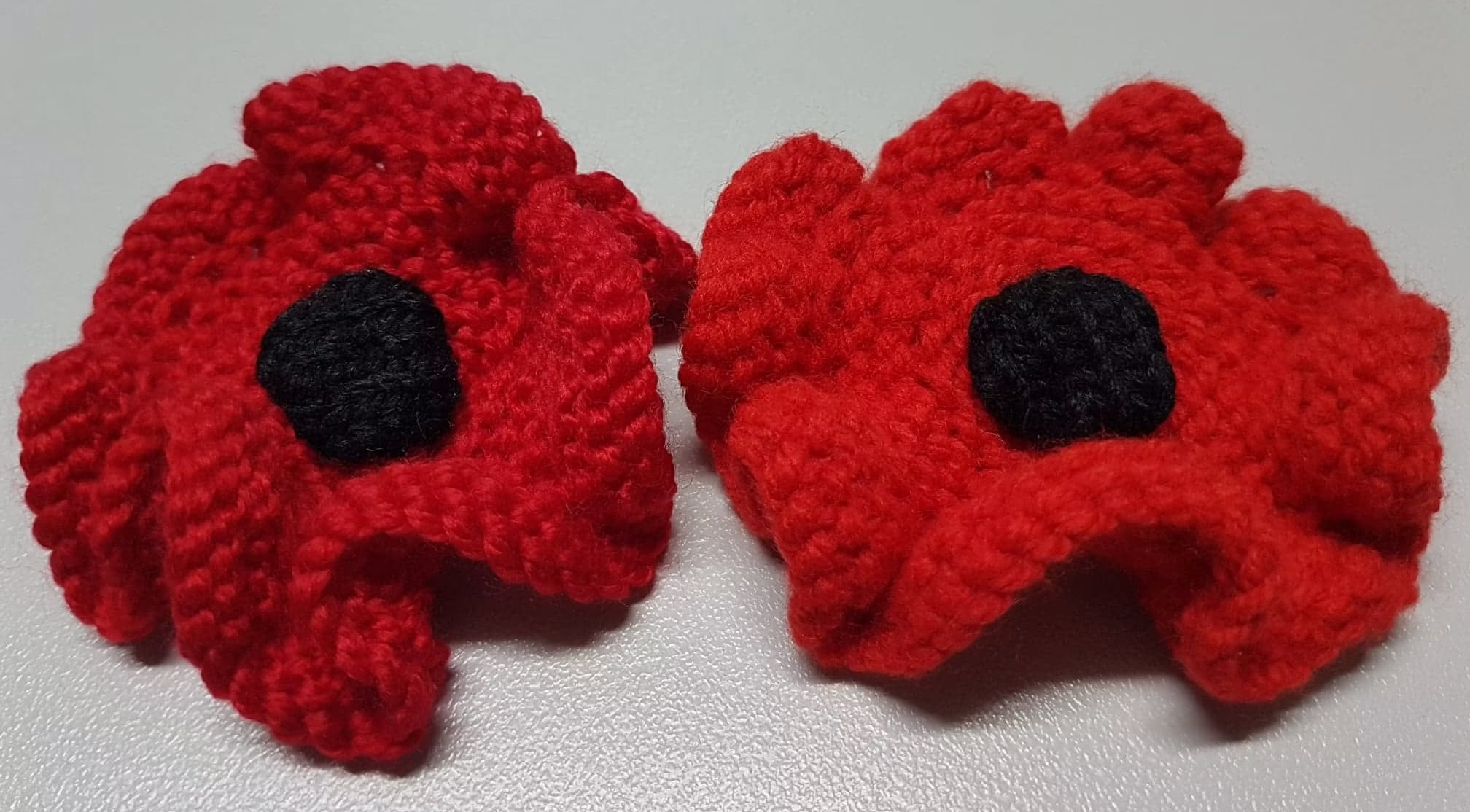
Each year, Australians pause on two important occasions to remember those who have served our country in times of war and conflict. On 25 April, ANZAC Day, we commemorate the service and sacrifice of the Australian and New Zealand Army Corps and all those who have served since. On 11 November, Remembrance Day, we pause to remember and honour all those who have served, and particularly those who died or suffered as a result of war and conflict.
Both occasions are marked by familiar traditions, including the wearing of flowers. But have you ever wondered why we wear a sprig of rosemary on ANZAC Day and a red poppy on Remembrance Day? Although both have become enduring symbols of remembrance, their origins and significance are quite different.
The Red Poppy – Remembrance Day
The red poppy, often referred to as the Flanders poppy, has become one of the most recognised symbols of remembrance around the world.
During the First World War, the battlefields of northern France and Belgium were devastated by artillery fire and constant fighting. Amid the destruction, red poppies appeared across the battlefields, their seeds having been brought to the surface by the disturbed earth.
These bright red flowers became a poignant sight amongst the devastation, and their association with the fallen was strengthened by a poem written in 1915 by Canadian Lieutenant Colonel John McCrae.
Serving as a medical officer during the Second Battle of Ypres, McCrae was moved by the sight of poppies growing among the graves of fallen soldiers. His poem, In Flanders Fields, captured the sadness of loss and the enduring memory of those who had died.
The poem became widely known and helped establish the red poppy as an international symbol of remembrance.
Following the war, the poppy was adopted as a commemorative emblem, with proceeds from the sale of artificial poppies helping to support veterans and their families. In Australia, the Returned Soldiers and Sailors Imperial League (now the Returned & Services League of Australia) first sold poppies for Armistice Day in 1921.
Today, the red poppy is traditionally worn around Remembrance Day, 11 November. It is also commonly placed on war graves and beside the names of service personnel on memorials as a small, personal tribute to those who made the ultimate sacrifice.
Rosemary – ANZAC Day
Rosemary has a much older association with remembrance. For centuries, it has been regarded as a symbol of memory and fidelity, appearing in literature, folklore and traditional customs.
The association is thought to date back to ancient times, when rosemary was believed to strengthen memory. Greek scholars were said to wear sprigs of rosemary in their hair while studying, while the herb was also used in ancient funeral and burial customs.
Its connection with remembrance is perhaps best captured in William Shakespeare’s Hamlet, written around 1600, when Ophelia says:
“There’s rosemary, that’s for remembrance; pray, love, remember.”
For Australians, however, rosemary has an additional and particularly poignant connection.
Rosemary grows wild on the Gallipoli Peninsula in Türkiye, the site of the ANZAC landings on 25 April 1915. Its presence there has given the herb a special place in Australian commemorative traditions.
Following the Gallipoli campaign, rosemary became particularly associated with remembering the Australians and New Zealanders who served there. Over time, wearing a small sprig of rosemary on ANZAC Day became an established tradition.
Today, rosemary is commonly pinned to a lapel or worn near service medals during ANZAC Day commemorations. Its fragrance and enduring greenery provide a simple but meaningful reminder of those who served and those who never returned.
Two Symbols, One Purpose
Although both flowers represent remembrance, they have their own traditional associations in Australia.
Rosemary is traditionally worn on ANZAC Day, its connection to the Gallipoli Peninsula making it particularly significant to the Australian and New Zealand story. The red poppy, meanwhile, is traditionally worn on Remembrance Day, reflecting its origins on the battlefields of the Western Front and its enduring association with those who died in war.
While both flowers are now seen at various commemorative occasions, many Australians choose to observe these traditions by wearing rosemary on ANZAC Day and a red poppy on Remembrance Day.
While the traditional associations are worth recognising, the wearing of either flower is ultimately a personal expression of remembrance and respect.
Knowing the history of each, however, helps us appreciate why these traditions developed and the different stories they represent.
Why Remembrance Matters
For many Australians, remembrance is more than an annual ceremony. It is deeply personal.
Behind every name on a memorial is a person who had a family, friendships, hopes and plans for the future. Some were young men and women who never had the opportunity to return home and build the lives they had imagined. Others returned carrying physical and emotional wounds that stayed with them long after the fighting ended.
For family historians and genealogists, these connections are often brought into sharper focus through research. Service records, enlistment papers, photographs, letters, diaries, casualty lists and memorial inscriptions can help us piece together the lives of those who served.
Sometimes, a single document or photograph can transform a name in a family tree into a much more complete story. We begin to understand not only where someone served, but something of the person they were and the experiences that shaped their lives.
These discoveries also remind us that the history of war is not simply a collection of battles, dates and military campaigns. It is a history of individuals, families and communities whose lives were changed forever.
As we approach Remembrance Day, whether we wear a red poppy or simply pause for a moment of silence, we are participating in a tradition that connects generations.
At the eleventh hour of the eleventh day of the eleventh month, we pause to remember those who served, those who suffered and those who made the ultimate sacrifice.
We remember not just the events of the past, but the people behind them.
Lest We Forget.
References and further reading
Australian War Memorial
- Rosemary – History of rosemary as a symbol of remembrance and its association with Gallipoli and ANZAC Day.
- Flanders Poppies – The origins of the red poppy as a symbol of remembrance and its association with the First World War.
- Dress Protocols and Traditions for ANZAC Day – Information about wearing rosemary and poppies at commemorative services.
- Artificial Poppy: Decoration Day 1921 – Historical information about the first Australian poppy appeal organised by the Returned Soldiers and Sailors Imperial League in 1921.
Department of Veterans’ Affairs – Anzac Portal
- Rosemary as a Symbol of Commemoration in Australia – Further information about rosemary, its historical associations and its significance to Australians.
- Rosemary – Here They Come: A Day to Remember – An explanation of the rosemary tradition and its Gallipoli connection.
Literary reference
- Hamlet – William Shakespeare, Act 4, Scene 5 – The source of Ophelia’s famous words about rosemary and remembrance.